
By
Bloomberg
Published
June 9, 2025
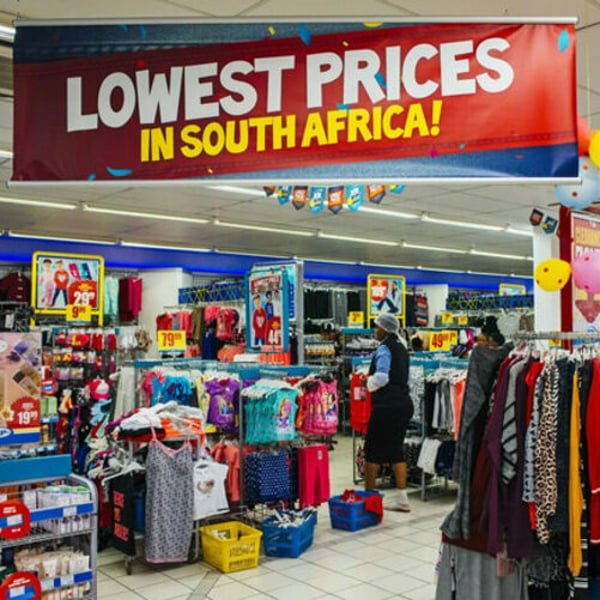
South African clothing retailers plan to add hundreds of new stores next year, even as the continent’s most industrialized economy lowers its economic growth forecast.

Pepkor Holdings Ltd., Africa’s largest clothing retailer, The Foschini Group Ltd. and Mr Price Group Ltd. aim to open as many as 600 outlets, largely focusing on their discount brands.
In contrast, food retailers Pick n Pay Stores Ltd. and Spar Group Ltd. expect muted store growth over the next 12 months. Last month, the National Treasury lowered its forecast for annual gross domestic product expansion over the next three years to 1.6% from 1.8%, citing the trade turmoil sparked by U.S. President Donald Trump.
“There is a level of retail saturation in South Africa and when economic growth is so weak, there’s limited scope for organic space growth,” said Atiyyah Vawda, an executive director at Avior Capital Markets in Johannesburg. “So new growth comes from brands they recently acquired and under-penetrated brands that do not have sufficient exposure in particular areas.”
Still, retailers have slowed space growth compared to a year ago and carefully evaluate new openings to ensure sufficient returns, Vawda said.
“A huge amount of development is taking place outside of major metro areas in the country,” TFG Chief Executive Officer Anthony Thunström said in an interview Friday. In these areas, “there’s a massive informal economy and a lot of its cash often isn’t really measured in official GDP numbers.”
Retailers remain selective about store expansion and may open fewer outlets.
“We don’t want to get sucked into a space race,” Mr Price CEO Mark Blair told reporters. “It’s not just growth, it’s quality space,” that meets strict profitability criteria. Blair said last year, the Durban-based company rejected up to 70% of the locations offered.
Clothing retailers account for three of the five worst-performing stocks on the FTSE/JSE Retailers Index this year, with building material retailers occupying the other two spots.
Shoppers seeking T-shirts and shoes that fit their budgets are also increasing their online purchases. Almost 6% of TFG’s local sales come through its online Bash platform, and the company expects that share to nearly double over the next two or three years.
This trend may also temper the growth of full retail outlets, as more orders ship from large distribution centers and so-called dark stores.
“That stock doesn’t necessarily have to sit in fully lit stores anymore,” Thunström said. “We can make it more efficient.” TFG’s online unit recently became profitable, about two years ahead of schedule.